Organization
Illinois Heartland Library System (Edwardsville, Ill.)
Scenario
Illinois Heartland Library System is a quasi-governmental agency serving 520 public, school, academic, and special libraries. Each year, staff and trustees from multiple library types are needed to serve as trustees on the IHLS board. However, finding volunteers, especially public library trustees, had proven consistently difficult. Additionally, staff expected recruitment to be especially difficult during the 2020–2021 nominations period during the pandemic. IHLS needed a new way to reach potential board volunteers and persuade them to nominate themselves for an elected trustee position. Additionally, feedback and nominations for unqualified candidates suggested the need for an improved user experience and communications.
Action
Primary Goals
- Recruit nominees for the IHLS Board, especially public library trustees. Specifically:
- To successfully recruit enough board nominees for that year’s slate by the end of the nomination period.
- Improve the nominee and staff user experiences. Specifically:
- To improve communications and reduce the number of nomination form errors during the current nomination period and reduce the number of unqualified candidates.
- To make the nomination form data easier to utilize by IHLS staff.
Key Messages
- You can be part of something bigger—you can make an impact!
- You will personally benefit from serving as an IHLS board member.
- Your library will benefit from you serving as an IHLS board member.
I proposed and led a three-part integrated communications and marketing plan to address the user experience, improve email marketing efforts, and appeal to self-interest and the desire to be part of something bigger.
Strategy 1: Emotional Appeal with Video Storytelling
Collaborating with the Staff Liaison to the Board, an IT colleague, and current and recent IHLS board members, I led the creation of a video-centered communication plan to appeal to the pride and self-interest of potential board volunteers.
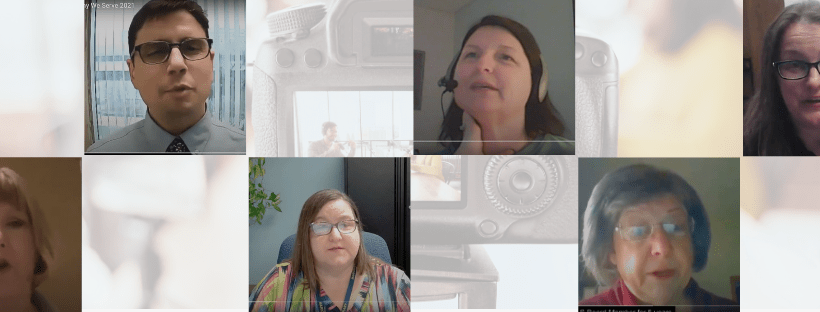
We started by using Zoom to collect video testimonials self-captured by current and recent IHLS board members. I wove snippets of their words into an authentic, collective story about why they chose to serve on the IHLS board and what they got from the experience. Once the script was drafted and video timings notated, an IT colleague with a talent for video editing pieced together the story, removed background noise, and set the video to uplifting music. The final piece was a 00:01:47 video with an option for further editing to create additional versions.
The video story was published on social media (YouTube, Facebook, and Twitter), shared during live membership meetings, published on a new “IHLS Board Nominations” webpage, shared during live membership meetings (in collaboration with membership programming staff), and sent to targeted email lists.
Strategy 2: Improved User Experience with Digital Content Planning and UX Writing
The Staff Liaison to the Board wished to provide nominees with more information on the role and duties of board members of IHLS, a state-funded agency. She hypothesized that providing additional information would increase the number of qualified nominees and set up board members for success (onboarding) while reducing the number of unqualified nominees and user errors.
Strategic Web Content Planning
After researching and defining user needs, I proposed taking the nominations and elections information, which was housed on a single webpage, and splitting it into two pages targeted to segmented audiences: potential nominees and member library voters. I also proposed a landing page with a short and easily remembered address that speakers at live events could use to direct people to either page. I sketched wire frames for the “Board Nominations” and “Board Elections” webpages and “IHLS Board Elections Hub” landing page. Then, I wrote, edited, and reorganized new and existing copy. This resulted in comprehensive, but not overwhelming, informational pages that would allow audiences to quickly find relevant information and customize the details they would see.
Nomination Form UX Writing
After examining the Nomination form, I suggested edits to make it easier for potential nominees to complete while also making it easier for staff members to use the information collected. With Nominating Committee input, I edited the fields for clarity, conciseness, and ease of use. I also addressed some staff pain points by adding a required field for a headshot and a character-limited bio. I also added copy to the Nomination Form introduction describing what nominees would need to complete the form, including the bio and headshot (complete with a link to information about taking professional selfies).
Finally, I changed the online nominations form to collect information prior to the final form submission, allowing Nominating Committee members to follow up with potential candidates who abandoned the form.
Strategy 3: Improved Email Marketing Performance Through Audience Segmentation
Prior to my coming on board at IHLS, all IHLS emails to members were sent to a single email list. To improve email campaign effectiveness and the communications user experience, I divided the audience into segments and encouraged subscribers to customize their subscription preferences. Now, I further segmented the audiences by identifying and tagging contacts by library type. I also used our state database to develop a new public libraries’ trustees segment—the most difficult population to recruit as board volunteers. I then created a schedule of emails featuring the board testimonial video and targeting two audiences, (1) public library members subscribed to business announcements and (2) public library trustees.
Results
By the close of the CY2021 nomination period, the video, emails, and landing page each had hundreds of views and opens, while the number of public library trustees increased from the prior year. I also gathered valuable information on the effect of specific subject line techniques on our audience segments—information which would be employed in all future email campaigns. Most interestingly, the video and the full integrated campaign have had a more significant long-term effect.
Adjustments for Campaign Years 2 to 4
Action
The video was reused for three subsequent nomination periods, with some campaign adjustments:
- A “New Subscriber” email automation was implemented, resulting in a 50%+ reduction in unsubscribes from public library trustees (high unsubscribe rates were noted during the 2020–2021 email campaign)
- Email and web content were refined
- Email subject lines were crafted to reflect insights learned during Year 1 A/B testing
- Twitter was dropped in favor of LinkedIn (approximately year 3)
Results
Year 2 resulted in approximately a 10% increase in nominations, with nomination numbers remaining steady in years 3 and 4. The increase was attributed to both the emotional inspiration of the video, improvements to informational communications published on the landing page, and more targeted email marketing. We hypothesized that a two-year video creation schedule would be ideal, especially if we found tools to reduce the staff time required.
Adjustments for Campaign Year 5
Action
In year 5, we created a new video using tools to aid in the collection and processing of video testimonials. This substantially reduced the amount of administrative and editing time required. Additionally, I put processes and guidelines in place that allowed me to delegate the script-writing portion of the work. The new video was again published on IHLS’s typical channels, including the nominations web page, direct emails, and social media.
Results
For the first time, IHLS had significantly more nominees than required—a huge success!
In fact, IHLS had more nominees than needed, leading to a new question: How can IHLS keep those not ultimately elected to a position involved as volunteers after the disappointment of not winning an election board position? These individuals were therefore identified as potential volunteers who could be quickly tapped for other projects and opportunities, including serving as non-elected committee members.
 Shandi S. Greve Penrod